Lft Quality of Life Article
Recovery Week
When I’m right, I’m right. And when I’m wrong, I could’ve been right.
Eggs, Lfting, running, jumping, protein powder, red meat, sodium with plenty of water, constant food tracking, and even alcohol. These are all things some people may say are unhealthy.
The truth is, almost anything can become a problem when there is no balance, no awareness, and no break from the routine. That is where Recovery Week comes in.
Think of Recovery Week Like a Mutual Fund
Recovery Week is like investing in a mutual fund instead of chasing individual stocks. It gives your body a chance to rebalance, recover, and see what is actually working.
If you take a supplement every day, how do you know if it is helping? Your body can become desensitized, or you might just stop noticing what is actually making a difference. Taking a break gives you data. You might feel no different, or you might even feel better.
Rule #1: Everything in moderation. No one thing is always good, not even laughter, although it is great for your core.
Rule #2: I’m right even when I’m wrong because of Recovery Week. Let me explain.
Recovery Does Not Mean Resting
Recovery Week is not about kicking your feet up and doing nothing. We still work, just differently. If you run a lot, this week you Lft. If you eat a lot of meat, try more plants. If you are always in the gym, get outside and hike, bike, run, or walk. If you rely on supplements, skip them for a bit and find nutrients in whole foods.
What Recovery Week Includes
Recovery Week changes the focus of training without turning the entire week into rest or testing. Each part has a different purpose:
Cardio Day
Build your engine with a focused cardiovascular session that feels different from your regular training.
Mobility Day
Slow down, open up tight areas, and give your joints and movement quality more attention.
Tough Bodyweight Day
Challenge your whole body using your own weight while taking a break from the usual program and equipment.
Testing Day
Record repeatable measures, review progress, and establish the next baseline. Testing Day is one part of Recovery Week.
We also encourage you to try something new. Choose an outdoor activity, follow a yoga class on YouTube, take a spin class, go swimming, hike, bike, or explore another way to move. A new activity challenges the body and mind without repeating the same training stress.
Why This Works
My clients do the same program for three weeks straight because it takes time to learn form, rhythm, and body awareness. Once the movements are familiar, more energy can go into the actual exercise. That is when you can Lft heavier, sprint faster, stretch further, and make real progress.
Recovery Week flips the script. We go back to learning. New movements challenge your body in a different way. It still feels hard, but it creates less repetitive wear and tear. That is the magic. Learning feels like working, but it also helps you recover.
Testing Day: Establish and Measure Your Baseline
Testing Day happens during Recovery Week, but it is not the whole week. It gives us a clear starting point and a repeatable way to see how far you have come. Maybe you lift more, do more push-ups, move better, recover faster, or simply feel better after a workout. Progress comes in many forms.
You do not need to be a current client to begin. Join Coach Eric for one guided Testing Day session during Recovery Week. We will look at what you can do safely today, record a simple baseline, and give you something real to compare against in the future.
1. Complete Testing Day
Use coaching to complete repeatable tests safely and understand what each result means.
2. Set Your Baseline
Record safe, repeatable starting numbers—not a judgment or a pass/fail score.
3. Measure Progress
Retest during a future Recovery Week and receive a personal progress report.
See What Your Progress Report Can Show
In this short video, Coach Eric walks through his own monthly progress report. It highlights improvements, reinforces the consistency behind the results, and gives you a simple way to celebrate and share your wins.
Complete yours after Testing Day, save your progress image, and post it if you want to share what your consistency has created.
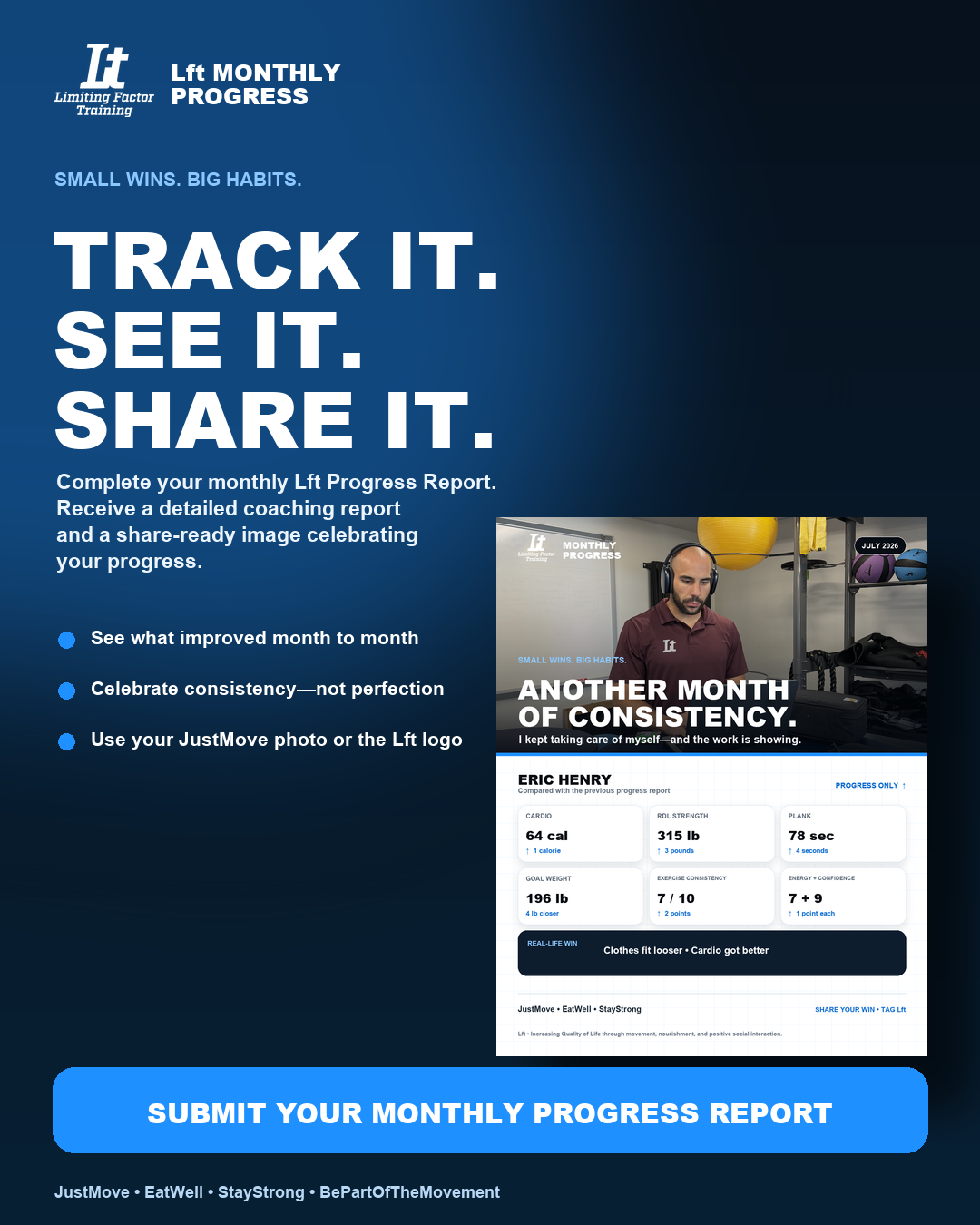
Complete Your Monthly Progress Report
Complete the form after Testing Day so your current results can be compared with your previous baseline.
Testing Day is when current Lft clients update their progress reports, photos, reflections, and next steps. If you are new, Coach Eric will help you establish a baseline first so future reports have something meaningful to measure.
Avoiding Burnout
Recovery Week is more than fitness. It is one of the best ways to avoid burnout in every part of life. Stepping away from your normal routine resets your baseline and brings awareness back.
A zombie does not know it is a zombie. Sometimes we have to force ourselves to step back and assess. Use this week to set the foundation for the month. Get ahead for once. Reduce stress. Do the things you have been putting off.
Declutter your workspace, clean up your inbox, reach out to someone important, meal prep, clean up your finances, map out your calendar, start a book, sell something collecting dust, or do absolutely nothing for a day on purpose.
The Point of Recovery Week
Recovery Week is not a time to coast. It is a chance to try new things, give your body a break, get ahead of the game, and reflect on how far you have come.
So yeah, even when I’m wrong, Recovery Week makes me right.
Try a Recovery Week Testing Day Session
Start with one coached Testing Day session during Recovery Week. We will see where you are today, record a safe baseline, and make it possible to measure your progress during future Recovery Weeks.
After you begin, you will receive a Client ID to connect your future testing, progress reports, and coaching history.
Already an Lft client? Complete your normal testing and progress-report process during Recovery Week.
Recovery Week starts the first Sunday of every month.
JustMove. EatWell. StayStrong. BePartOfTheMovement.